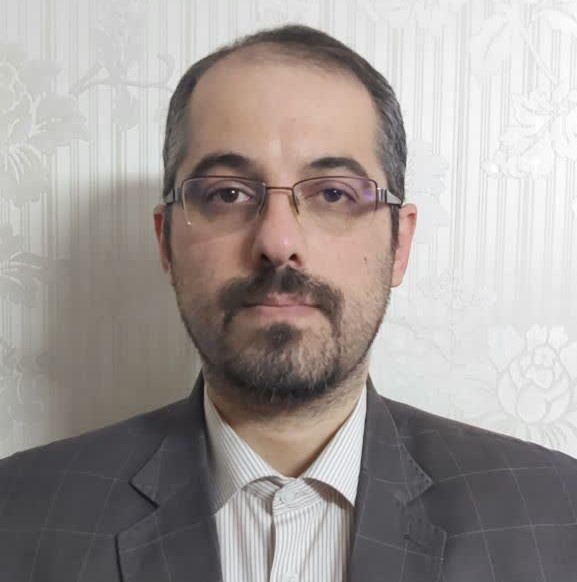
Who is Dr. Mahdi Mostafavi

Dr Seyed Mahdi Mostafavi holds a PhD in Quranic Sciences and Hadith from Shiraz University (2022), complemented by prior bachelor's and master's degrees in the same discipline

Who is Dr. Mahdi Mostafavi

His academic excellence is underscored by his high ranking in the national PhD entrance exam, particularly his demonstrated proficiency in English Beyond his scholarly research and publications, Dr Mostafavi contributes to academic exchange through the translation of English texts into Persian and actively fosters linguistic development by teaching both general and specialized English

Who is Dr. Mahdi Mostafavi

Major of Quranic and Hadith Sciences

Major of Quranic and Hadith Sciences

Major of Quranic and Hadith Sciences

The study of Quranic and Hadith sciences is a vast and intricate field that aims to preserve, interpret, and analyze the divine teachings of Islam These sciences are essential for understanding the Quran and the sayings of Prophet Muhammad (peace be upon him), ensuring their correct application in various aspects of life The major disciplines in these fields include

Quranic Sciences

Tafsir (Exegesis)

Tafsir is the science of interpreting the Quran Scholars use linguistic analysis, historical context, and cross-referencing with other Quranic verses and Hadiths to explain the meanings of the text Tafsir can be categorized into classical, linguistic, rational, and mystical interpretations

Ulum al-Quran (Sciences of the Quran)

This branch covers various aspects related to the Quran, including its revelation (asbab al-nuzul), compilation, preservation, styles of recitation (qira’at), and miraculous nature (i’jaz al-Quran)

Qira’at (Recitations)

The Quran was revealed in multiple dialects, leading to different valid modes of recitation Qira’at studies these variations and their implications on meaning and pronunciation

Nasikh wa Mansukh (Abrogation)

This field examines verses that were replaced or modified by later revelations, clarifying which rulings remain applicable

I’jaz al-Quran (Inimitability of the Quran)

Scholars explore the linguistic, scientific, and legal miracles of the Quran, proving its divine origin and uniqueness

Hadith Sciences

Ilm al-Hadith (Science of Hadith)

This science evaluates the authenticity of prophetic traditions by analyzing the chain of transmission (isnad) and the text (matn) It classifies Hadiths into sahih (authentic), hasan (good), da’if (weak), and mawdu’ (fabricated)

Mustalah al-Hadith (Hadith Terminology)
This branch defines the terms used in Hadith classification, such as mutawatir (widely transmitted) and ahad (solitary narration), to assess their reliability

Rijal al-Hadith (Biographical Evaluation of Narrators)
This field investigates the character, memory, and trustworthiness of Hadith narrators to determine their credibility

Sharh al-Hadith (Hadith Commentary)

Scholars provide explanations and interpretations of Hadiths, contextualizing their meanings and extracting legal and ethical lessons

Asbab al-Wurud (Context of Hadiths)

Similar to asbab al-nuzul in Quranic sciences, this field studies the circumstances in which Hadiths were spoken to ensure correct understanding

The sciences of the Quran and Hadith are crucial for Islamic scholarship They preserve the integrity of the divine message and guide Muslims in applying Islamic teachings accurately Scholars in these fields continue to contribute to the deep understanding and transmission of the Islamic tradition across generations

استصحاب در قرآن - Istishab in the Quran

استصحاب در قرآن - Istishab in the Quran

اِستصحاب، از ادلّه احکام یا از اصول عملی فقهی و به معنای حکم به بقای آنچه در زمان سابق ثابت بوده است.

۱ - استصحاب در لغت
استصحاب از ماده «ص‌ح‌ب» و در لغت به معنای به همراهی طلبیدن و چیزی را همراه خود قرار دادن است. [۱][۲]

۲ - اقوال حجیت استصحاب
استصحاب در علم اصول اصطلاح است؛ ولی با توجه به این‌که اصولیان در ملاک حجیت استصحاب بر سه نظرند آن را سه گونه تعریف کرده‌اند [۳]

ادامه نوشته

On the blasphemous evil act of burning a copy of the holy Quran

Dear All

It is with great sadness and deep concern that I address the recent incident of the burning of the Quran in Sweden. This despicable act is a clear violation of the values of respect, tolerance, and peaceful coexistence that we all hold dear.

While freedom of expression is an important right, it must never be used as a justification for inciting hatred, violence, or discrimination against any group or community. Burning the Quran, or any other religious text, is an unacceptable form of hate speech that has no place in a civilized society.

We must stand together in condemning this heinous act and affirming our commitment to promoting mutual understanding, respect, and dialogue among people of different cultures, faiths, and backgrounds. We must work tirelessly to build bridges of understanding and empathy that promote harmony and peace in our communities.

We call on the Swedish government to take swift and decisive action to ensure that such acts of hatred and discrimination are not tolerated in our society. We also urge all people to uphold the values of tolerance, respect, and compassion that are at the heart of our shared humanity.

Sincerely,

SMM

who is Abdullah Yusuf Ali

Abdullah Yusuf Ali, CBE, MA, LL.M, FRSA, FRSL (‎14 April 1872[5] – 10 December 1953) was an Indian-British barrister who wrote a number of books about Islam including an exegesis of the Qur'an. A supporter of the British war effort during World War I, Ali received the CBE in 1917 for his services to that cause. He died in London in 1953

who is Abdullah Yusuf Ali

Born: 14 April 1872
Bombay, Bombay Presidency, British India
Died: 10 December 1953 (aged 81)
Fulham, London, England
Religion: Islam
Denomination: Sunni Islam
Movement: Modernism
Occupation: Barrister

Ali's Quran translation

The Holy Qur'an: Text, Translation and Commentary

There have been 30 printed versions of his Quran translation. In Saudi Arabia, the state-sponsored Presidency of Islamic Researches, has modified the original Yusuf Ali translation. The Ahlul Bayt Digital Islamic Library Project, whose particular emphasis [is] on the Twelver Shi'ah Islamic school of thought, has analysed printings of Ali's translations to ascertain whether they have maintained Ali's understandings of the original Arabic text. They have determined there have been changes

who is Ali Quli Qarai

Ali Quli Qarai (b. 1947), translator and writer, born in Hyderabad, studied first at Madraseh Aizza and later at Madraseh Aliya and Osmania University in Hyderabad, India. After graduating from Osmania University with a Bachelor of Engineering (BE) in 1970, he went to the United States, where he graduated with a degree in Master of Business Administration (MBA) from the University of Wisconsin, Madison. For 14 years (1983-1997) he worked as Executive Editor and later on as Chief Editor of Al-Tawhid, an English quarterly of Islamic thought, translating many Arabic and Persian writings on various Islamic subjects. Qarai’s major work is his English translation of the Quran, first published in November 2003, entitled: “The Qur’an with an English Paraphrase”. The translation was published by The Centre for Translation of the Holy Qur’an, Qom, Iran in collaboration with the Islamic College for Advanced Studies (ICAS), London, United Kingdom. Qarai was associated with the Centre for Translation of the Holy Qur’an as a translation consultant, where the translation was a product of more than five years of full-time effort. In 2004 the translation was rebranded and republished by the Islamic College for Advanced Studies (ICAS), entitled: “The Qur’an; With a Phrase-by-Phrase English Translation”. Since then the translation have been revised and published in new editions, the latest known being a reprint of the 6th edition in 2019. The Second (Revised) Edition 2005 was freely distributed online by the International Quran News Agency (IQNA) and is available at multiple online Quran websites. Qarai’s translation is commonly regarded as both being faithful and fluent at the same time. The language is clear, straightforward and dignified, distant from both the archaisms and the modernisms that have been affected by other English translators of the Quran. Compared to other English translations of the Quran, Qarai’s translation is unique in regards to its paraphrasing style, an approach that enables readers possessing an elementary knowledge of Arabic to follow the meaning of the Arabic Text of the Quran. The translation has been carried out according to classical commentators of the Quran, this with references to both Sunni and Shia work, inclining to the later perspectives

Qur'anic studies (academic study of the Quran)

Qur'anic studies is the academic study of the Quran, the religious scripture of Islam.[1]

Schools

Behnam Sadeghi and Mohsen Goudarzi classify scholars of Quranic studies into four groups: traditionalists, revisionists, skeptics, and neo-traditionalists.[2]

Most premodern scholars belong to the traditionalist group. According to Sadeghi and Goudarzi, the traditional account held that the Prophet Muḥammad disseminated the Qur’ān gradually. Some of his Companions compiled copies of the scripture. These codices had differences. Motivated by the differences and seeking uniformity among Muslims, the Caliph ‘Uthmān, himself a Companion, established a standard version. He – or, more precisely, a committee of Companions appointed by him – did so by sending master copies of the Qur’ān to different cities – codices that themselves differed slightly in a small number of spots – and people in turn made copies of them. In subsequent decades and centuries, this standard text was read differently by different readers. [3]

— Behnam Sadeghi and Mohsen Goudarzi, Ṣan‘ā’ 1 and the Origins of the Qur’ān, 2012
The traditional account "continues to be fairly popular among the specialists in the Muslim world".[4] European and American scholars, however, do not often agree with this account. This is because there is a "prevailing distrust in the literary sources on which it is founded".[4]

Sadeghi and Goudarzi categorize the majority of modern Euro American scholars into two main groups. The revisionist group rejects the traditional account as wrong. They dispute the idea that Uthman sought to correct the text, or they believe that important modifications in the standard text continued after Uthman, or, in the instance of scholars such as Wansbrough, they believe it is perhaps "anachronistic" to talk of the Quran during the time of Uthman, because the text came into being much later.[4]

Among the notable revisionists are John Wansbrough, Patricia Crone, Alfred-Louis de Prémare, and David Powers. The skeptics, the larger group of the two, neither accept the traditional account nor the revisionist ones, being "equally unconvinced by traditional and revisionist narratives". However, Sadeghi and Goudarzi calls them de facto revisionist because of their "attitude toward the literary sources".[5]

Neo-traditionalists constitute the minority among scholars in the Western academia. They agree with important elements of the traditional account. Although they don't accept every report conveyed in the later sources, they do think that a critical and in-depth examination of the literary evidence supports the traditional account. Some well known members of this group include Michael Cook, Muḥammad Muḥaysin, and Harald Motzki, with the first being a revisionist defector.[6] Neo traditionalists "have their counterparts in the Muslim world".[6]

Journals

Journal of Qur'anic Studies (Edinburgh)

QURANICA – International Journal of Quranic Research [7]

JIQSA-Journal of the International Qur’anic Studies Association [8]

Major books

Brill's Encyclopaedia of the Qurʾān

Center for Islamic Science's Integrated Encyclopedia of the Qurʾān (IEQ) [9]

The Qur'anic Studies Series, published by the Oxford University Press [10]


References
Nasr, Seyyed Hossein (2020). "Qurʼān". Encyclopædia Britannica Online. Retrieved 3 April 2020.
Sadeghi & Goudarzi 2012, pp. 1–4.
Sadeghi & Goudarzi 2012, pp. 2.
Sadeghi & Goudarzi 2012, p. 3.
Sadeghi & Goudarzi 2012, p. 3-4.
Sadeghi & Goudarzi 2012, p. 4.
"Qur'anica Journal". Retrieved 3 April 2020.
"IQSA". Retrieved 3 April 2020.
"IEQ". Retrieved 19 February 2022.
"Oxford University Press: Qur'anic Studies Series". Retrieved 3 April 2020.
Sources
Sadeghi, Behnam; Goudarzi, Mohsen (2012). "Ṣan'ā' 1 and the Origins of the Qur'ān". Der Islam. Walter de Gruyter GmbH. 87 (1–2): 1–129. doi:10.1515/islam-2011-0025. ISSN 1613-0928.
بررسی جایگاه حضرت عیسی مسیح در قرآن - A study of the position of Jesus Christ in the Qur'an

بررسی جایگاه حضرت عیسی مسیح در قرآن - A study of the position of Jesus Christ in the Qur'an

گفت‌وگوی مسلمانان و مسیحیان برای رفع سوء تفاهم‌ها ضروری است / اماده

با فرا رسیدن سالروز میلاد حضرت عیسی(ع)، میلیون‌ها نفر در سراسر جهان این مناسبت و همچنین سال نو میلادی را جشن می‌گیرند و این می‌تواند فرصتی عالی برای تفکر عمیق‌تر در مورد همزیستی مسالمت‌آمیز بین ادیان باشد.

خبرگزاری ایکنا برای بحث بیشتر درباره این موضوع با متیو کیمینگ (Matthew Kaemingk)، استادیار مدرسه الهیات فولر (Fuller Theological Seminary) و مدیر مؤسسه ایمان و زندگی عامه «ریچارد جان موو» (Richard John Mouw Institute of Faith and Public Life) در هیوستون واقع در ایالت تگزاس آمریکا گفت‌و‌گویی داشه که مشروح آن را در ادامه می‌خوانید:

ادامه نوشته

حضرت عیسی مسیح ع در قرآن - Jesus Christ in the Quran

حضرت عیسی مسیح ع در قرآن - Jesus Christ in the Quran

گفت‌وگوی مسلمانان و مسیحیان برای رفع سوء تفاهم‌ها ضروری است / اماده